NEWS
When Words Aren’t the Way In: Disability-Inclusive Communication in Home Visits
- Aug 27, 2026
-
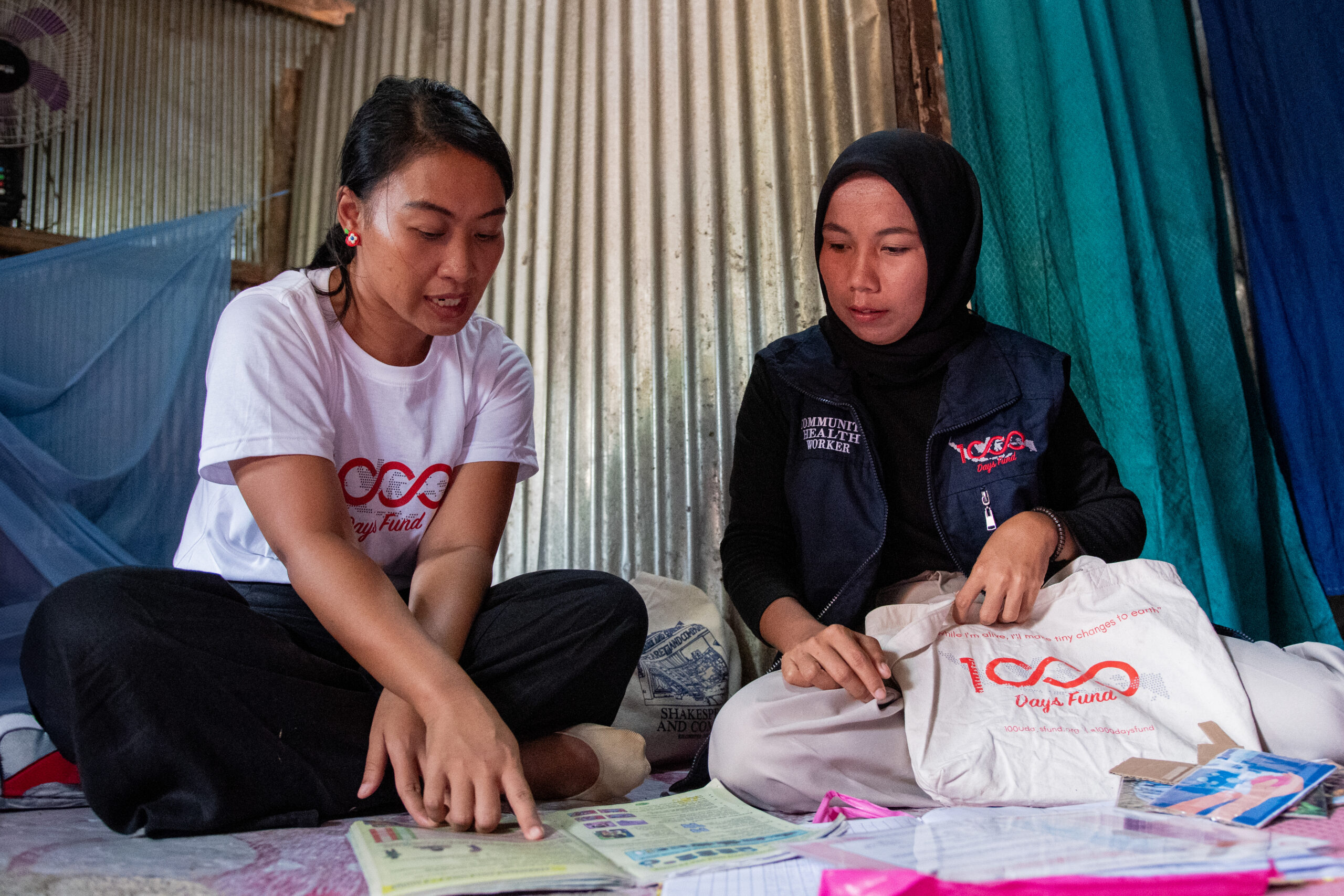
Among the families TDF’s community health workers (kader) support in Manggarai Barat, some parents are deaf and non-verbal, a communication barrier that standard verbal nutrition counseling isn’t designed to reach. In one such household, both parents were deaf and non-verbal, and accompaniment began while the mother was still pregnant, continuing through her child’s first two years.
Every family, every child, and every household, including those with a disability, has an equal right to information, health services, and the opportunity for good maternal and child health. That principle shaped how kader approached this kind of accompaniment from the very first visit.
Building trust before teaching anything
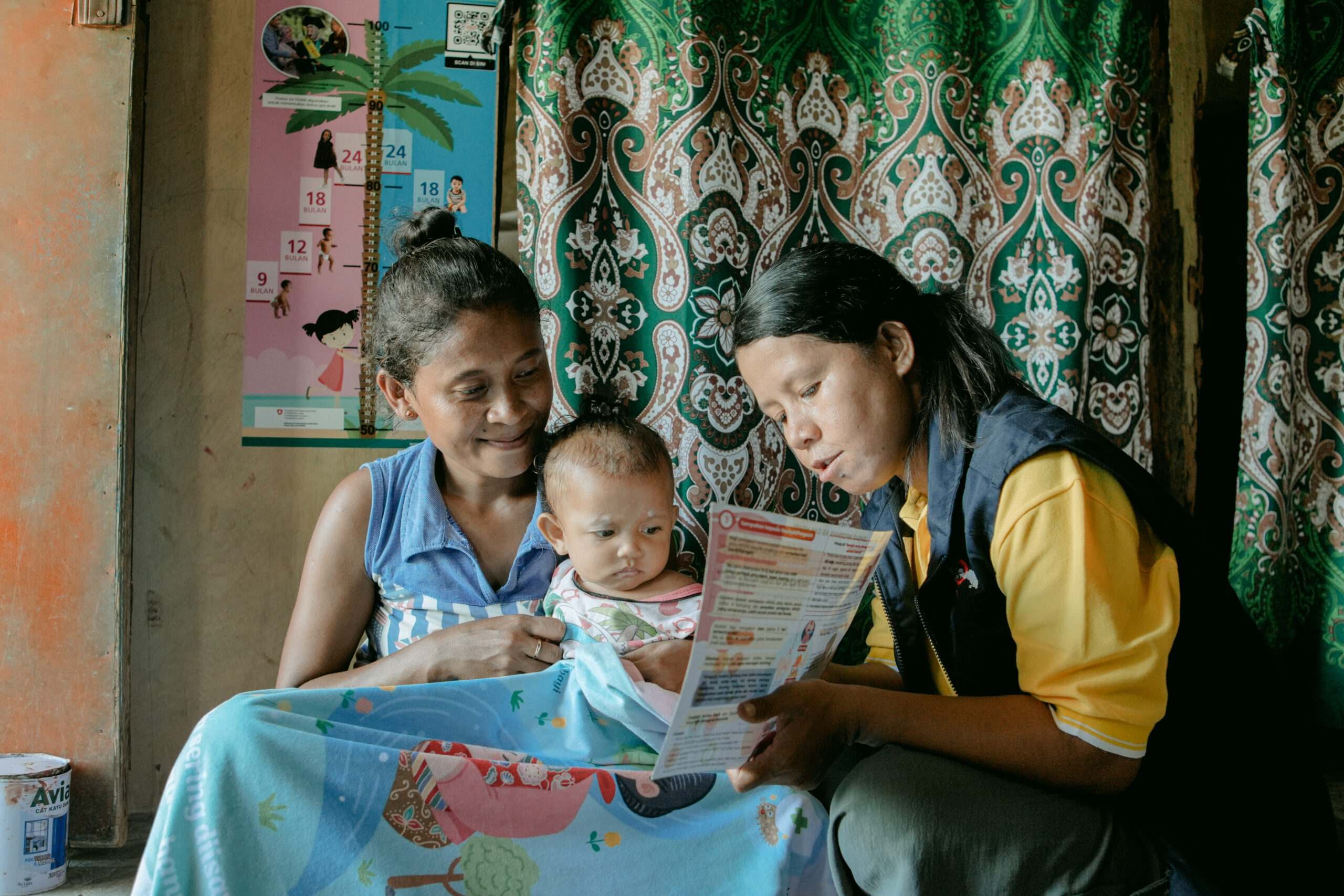
On the first visit, the priority wasn’t education, it was building rapport. Kader relied on non-verbal communication: hand gestures, facial expression, eye contact, pointing directly at pictures or objects, and demonstrating actions rather than describing them. Where a spouse or family member already understood how to communicate with the parent, kader involved them as a bridge, while avoiding speaking too quickly or relying on spoken language alone.
Learning the family’s own communication patterns
Regular visits followed, with kader paying close attention to the non-verbal cues each family already used. Over repeated visits, kader began to recognize the specific gestures and signals a family relied on in daily life. This took patience and repetition, but communication became easier once a shared understanding of those gestures had formed.
Turning to visual education tools
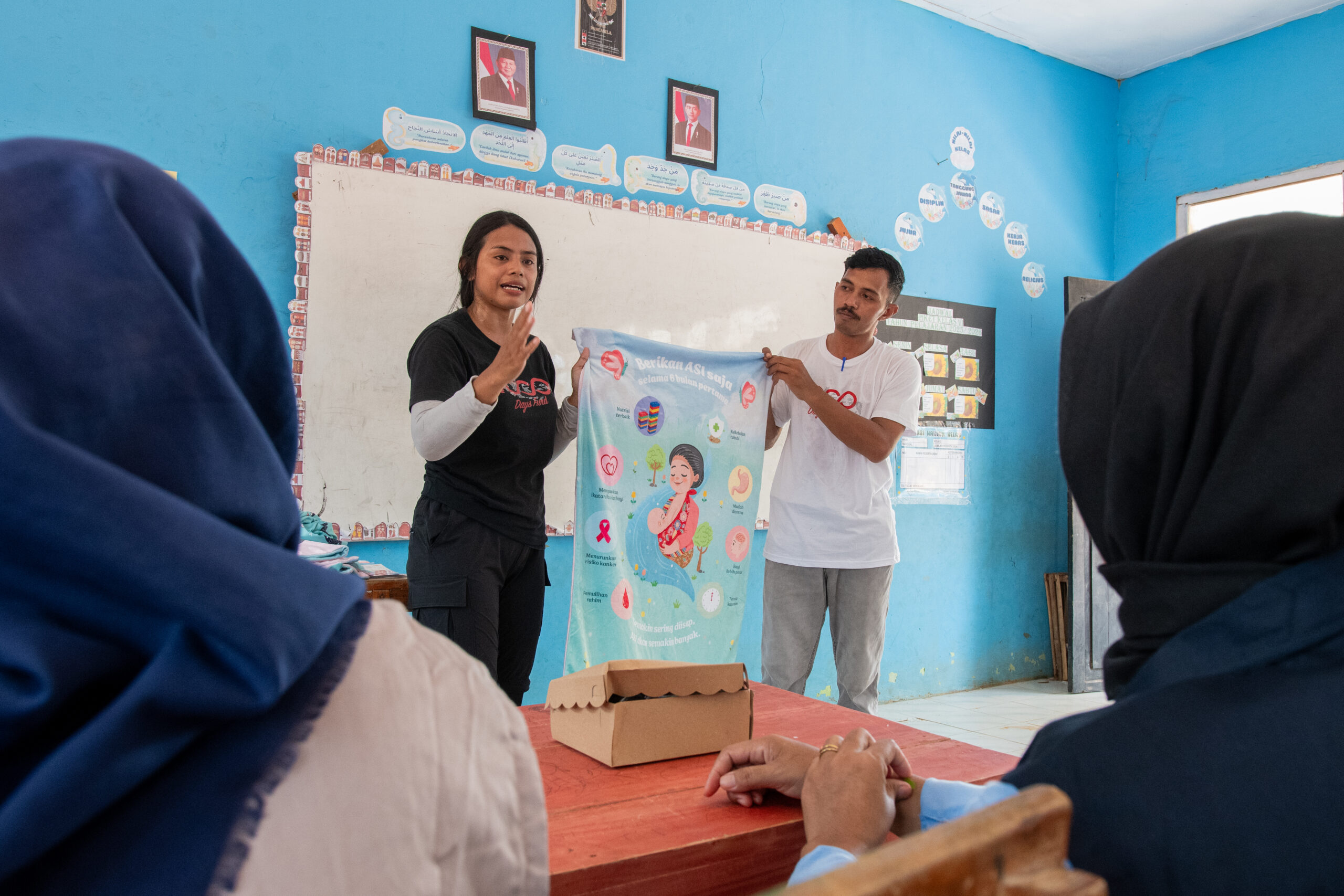
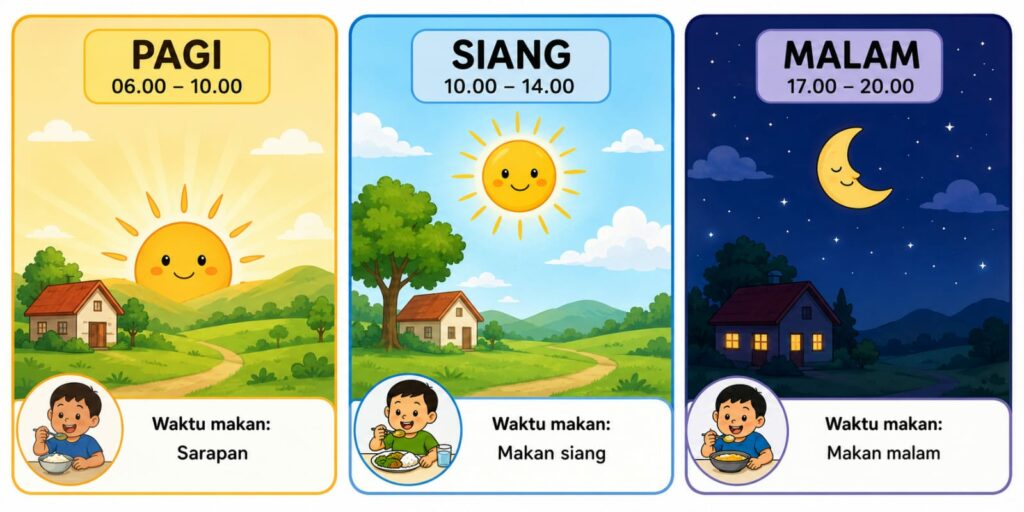
Once trust was established, kader introduced picture-based tools to communicate health messages: images for exclusive breastfeeding, nutritious food (animal protein, rice, vegetables, and fruit), handwashing with soap, Posyandu visits and immunization, a healthy and active child, and morning, afternoon, and evening sun icons to help clarify a child’s feeding schedule. Picture-based media let a caregiver grasp a message without needing to read long sentences.
Monitoring feeding practices through pictures
At each visit, kader used the time-of-day images alongside food images to check in on what a child had eaten, for example, showing “morning” followed by an image of egg or fish to check whether that food had been given, or showing “afternoon” and “evening” to track how often a child was fed, or showing fruit, vegetables, fish, chicken, or egg to understand the variety in a child’s diet. This lets a caregiver respond simply, through gesture, pointing at a picture, or a nod.
Repeating the same key messages, consistently
At every visit, kader repeated the same core messages using the same images and consistent body language, so they became familiar and easy to recognize. The messages stayed constant: exclusive breastfeeding for infants aged 0 to 6 months, nutritious complementary feeding with daily animal protein after 6 months, three meals a day with no random snacking, handwashing before preparing food, before breastfeeding or feeding a child, and after activity outside the home, and monthly Posyandu visits for growth monitoring and immunization.
Moving forward
This approach, built on patience, consistent visual communication, routine visits, and involving spouses, family members, and Posyandu kader as communication bridges, has since been passed down to other kader. When they encounter a family with similar communication needs, whether at a follow-up visit or with a different household entirely, they already have the tools and process to apply.
This story comes from 1000 Days Fund’s TNI (training &innovation) Corner, a biweekly sharing session where field teams exchange practices and challenges from across our program areas.
RECENT POSTS
Saving the People Who Save Us: Close the Fiscal Gap in Indonesia’s Primary Healthcare
30/09/2026