FEATURED PUBLICATION
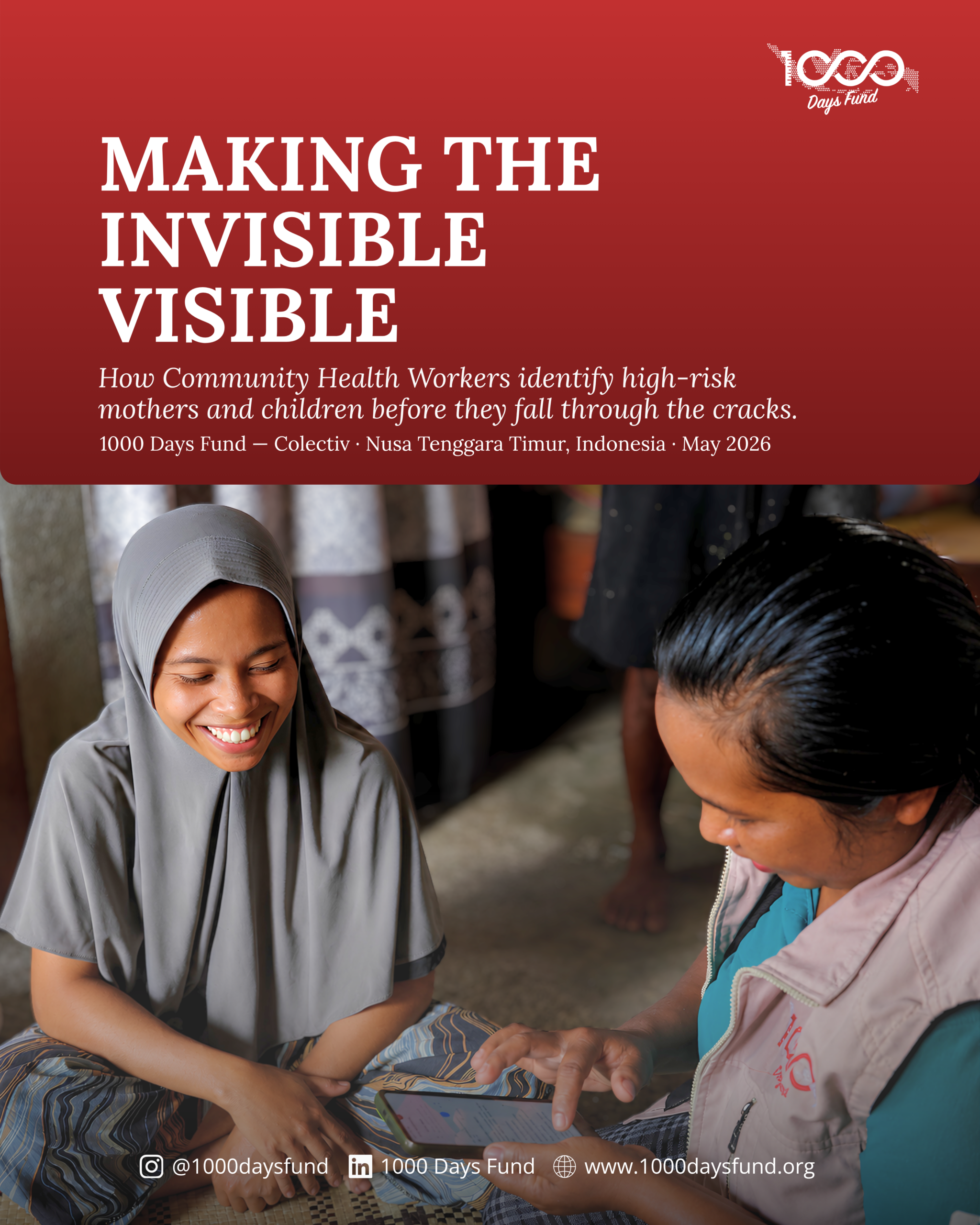
Making The Invisible Visible, 2026
Making The Invisible Visible
A rapid, AI-assisted qualitative study with 103 Community Health Workers (CHWs) in Rote Ndao and Timor Tengah Selatan (TTS) found that CHWs play a critical but often overlooked role in preventing stunting: they identify mothers and children at risk long before those risks become visible in routine health data. This study showed that through growth monitoring, household outreach, community intelligence, and personalised home visits, CHWs identify vulnerable mothers and children early enough for preventive action to be taken. However, these CHWs face significant challenges, most notably the difficulty of consistently reaching households. To address these hurdles, one of the innovations through the Village Task Force (Satgas) has implemented a collaborative model that strengthens the impact of CHW outreach.
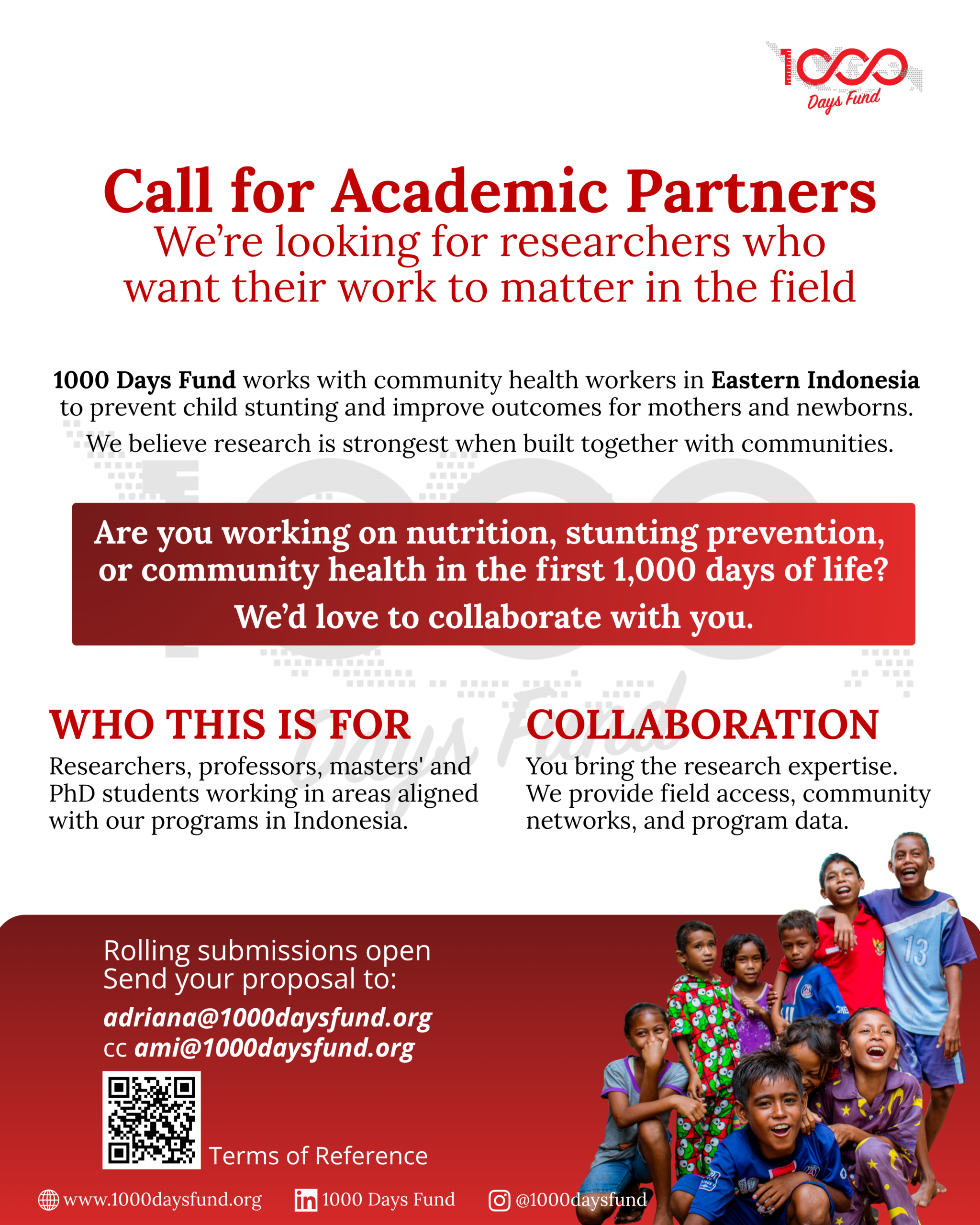
Call for Academic Partner, 2026
Call for Academic Partner For 1000 Days Fund Programme 2026
The 1000 Days Fund invites all researchers and academicians to collaborate on applied research with the aim to strengthen the community health system in Indonesia. In response to the issue of high stunting prevalence particularly during the first 1000 days of life, through empowerment of community health workers (CHW) as the backbone in delivering essential intervention at community level. The 1000 Days Fund program model ensures that CHWs are well supervised, have clear and sustainable roles, are adequately skilled, supported with proper resources, and fully integrated into the health service system (Salaried, Skilled, Supervised, Supplied, and Secured).
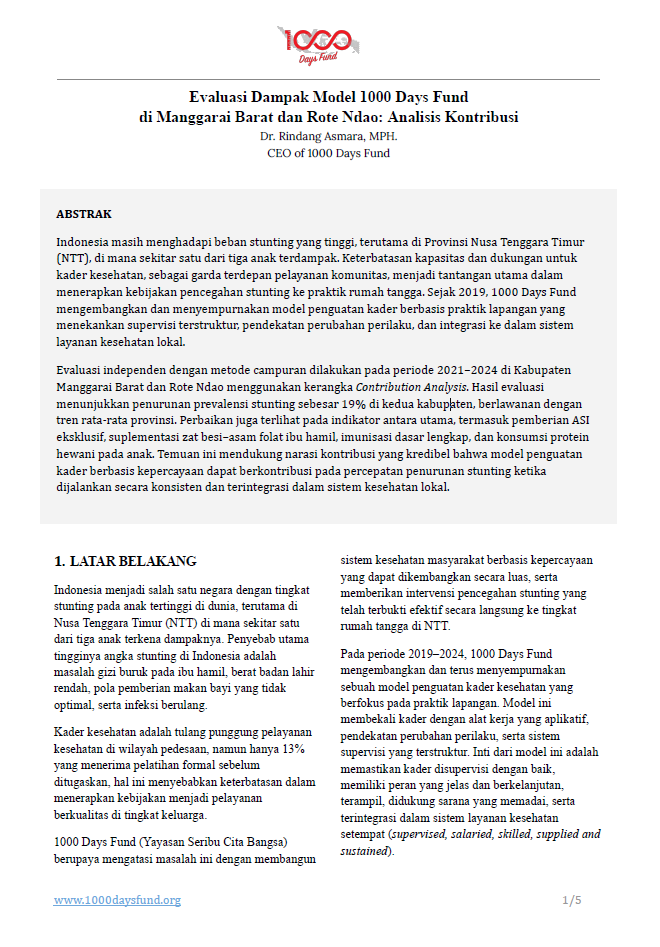
Evaluasi Dampak, 2025
Evaluasi Dampak Model 1000 Days Fund di Manggarai Barat dan Rote Ndao: Analisis Kontribusi
Evaluasi independen dengan metode campuran dilakukan pada periode 2021–2024 di Kabupaten Manggarai Barat dan Rote Ndao menggunakan kerangka Contribution Analysis.
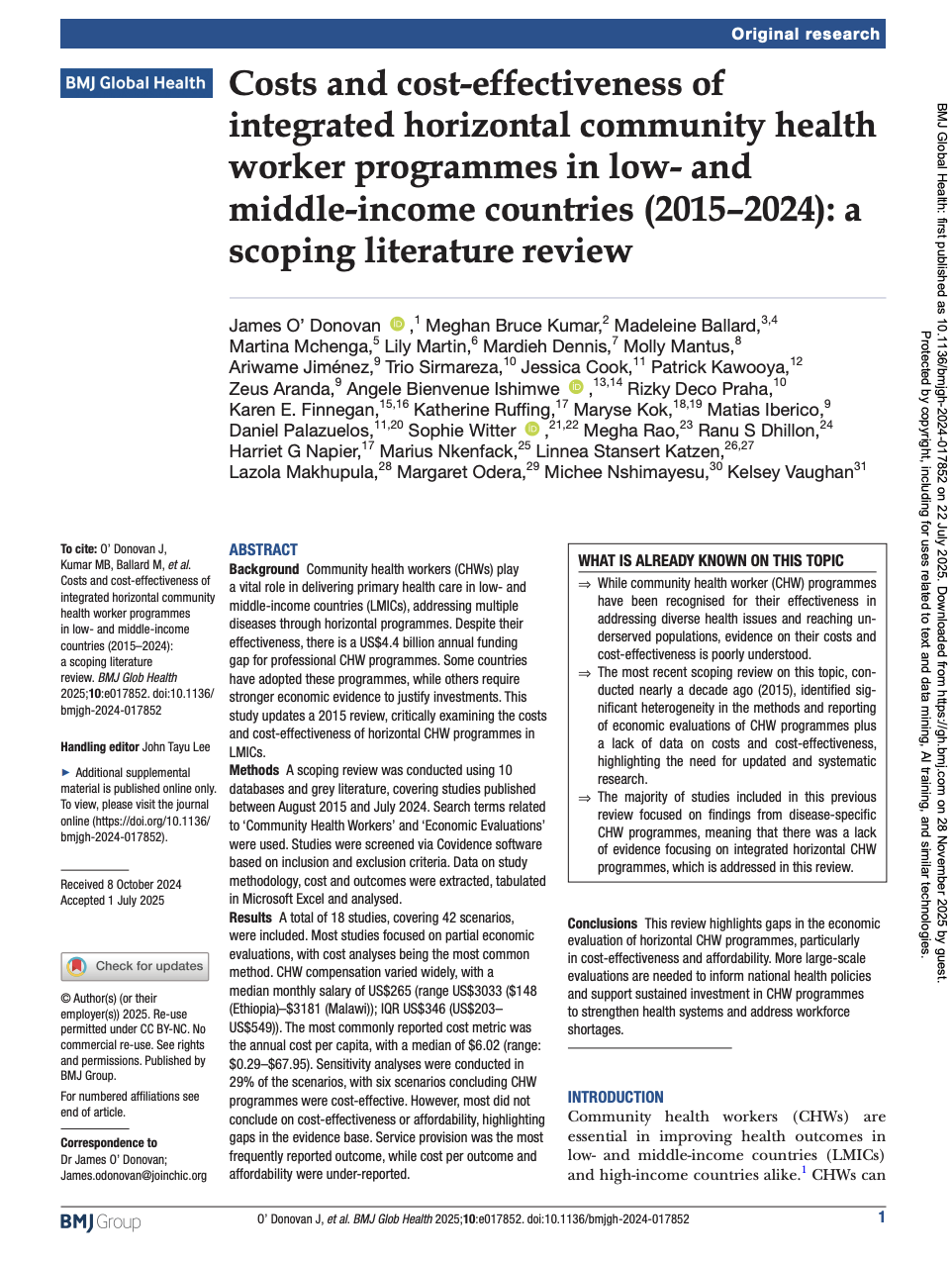
BMJ Global Health, 2025
COSTS AND COST-EFFECTIVENESS OF INTEGRATED HORIZONTAL COMMUNITY HEALTH WORKER PROGRAMMES IN LOW- AND MIDDLE-INCOME COUNTRIES (2015-2024): A SCOPING LITERATURE REVIEW
Integrated community health worker programmes in low- and middle-income countries show promise but lack consistent cost-effectiveness and affordability evaluations, underscoring the need for stronger economic evidence to guide policy investment.