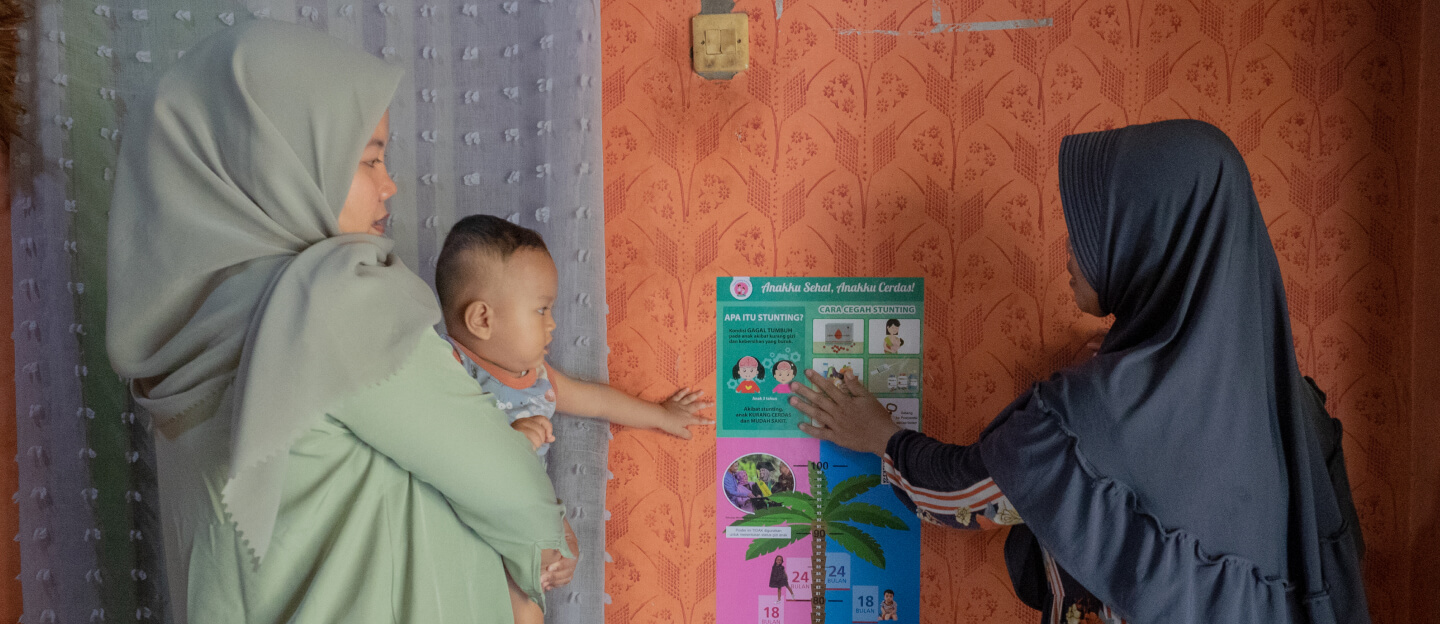
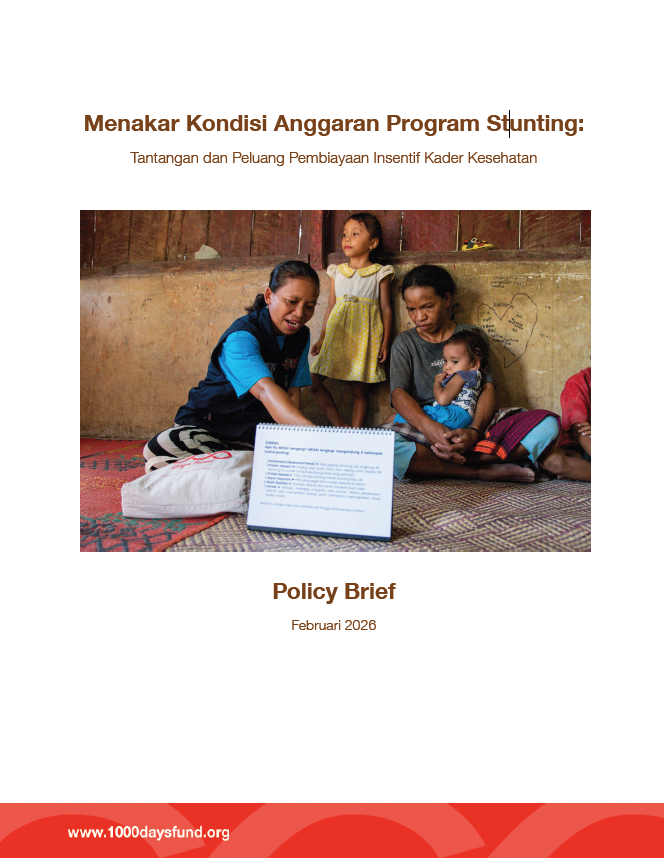
This policy brief examines Indonesia's fragile budget for stunting programs, where community health worker (kader) incentives remain low and inconsistent. Some kaders receive as little as Rp60,000 every 3–4 months. Regions with the highest stunting rates, like NTT, are also most dependent on central transfers, which are now shrinking amid fiscal efficiency measures. The brief proposes two alternative financing sources: a sugary drink excise tax, projected to cut consumption 17.5% while generating Rp3.6 trillion annually for kader incentives and training, and regional bonds/sukuk, piloted in fiscally stronger provinces like DKI Jakarta, to fund community health systems sustainably.
FEATURED PUBLICATION
Policy Brief, 2026
Menakar Kondisi Anggaran Program Stunting: Tantangan dan Peluang Pembiayaan Insentif Kader Kesehatan
Policy Brief, 2026
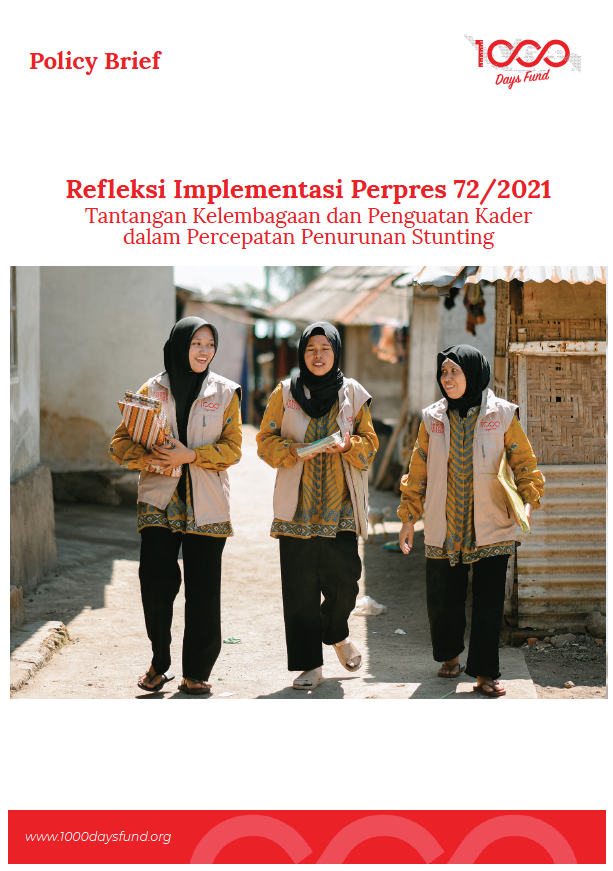
Refleksi Implementasi Perpres 72/2021 Tantangan Kelembagaan dan Penguatan Kader dalam Percepatan Penurunan Stunting
This policy brief examines why Presidential Regulation 72/2021, Indonesia's flagship stunting-reduction framework, has fallen short of its 14% target, with national stunting prevalence still at 19.8% in 2024. It identifies two core gaps: weak cross-sector convergence at the sub-district and village level, and the regulation's failure to formally recognize community health workers (kaders) as frontline actors, leaving their training, incentives, and job protection unaddressed. Drawing on 1000 Days Fund's field experience — including a Rp6 billion Village Fund allocation across 110 villages in NTT and NTB — the brief recommends a permanent, functional Stunting Task Force from district to village level, formal recognition of kaders under the "5S" framework (skilled, supplied, supervised, salaried, secured), and mandating Village Funds as a sustainable financing source for kader strengthening.
Policy Brief, 2026
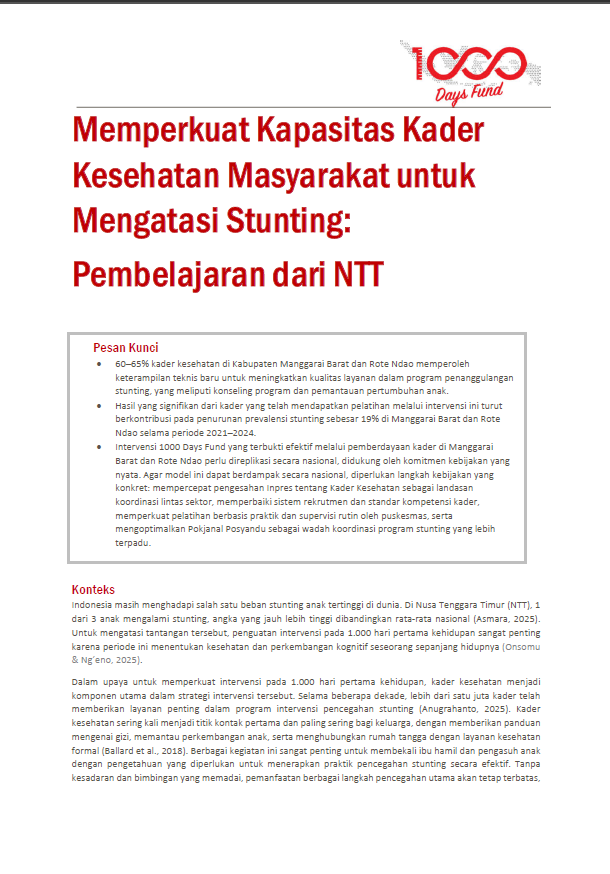
Memperkuat Kapasitas Kader Kesehatan Masyarakat untuk Mengatasi Stunting: Pembelajaran dari NTT
This policy brief examines how strengthening community health worker (kader kesehatan) capacity can accelerate stunting reduction in Indonesia. Drawing on 1000 Days Fund's 2019–2023 intervention in Manggarai Barat and Rote Ndao — structured training, the Smart Chart behavior-change tool, and continuous supervision — the evidence shows 60–65% of kaders gained new technical skills, contributing to a 19% drop in stunting prevalence between 2021 and 2024, while comparable NTT districts without the intervention saw stunting rise by 1.4%. The brief argues this model should be replicated nationally, and outlines concrete policy steps: accelerating a Presidential Instruction (Inpres) on community health workers, improving recruitment and competency standards, strengthening puskesmas-led training and supervision, and optimizing Pokjanal Posyandu for cross-sector coordination.
1000 Days Fund's Leimena Conference Abstract Compendium, 2026
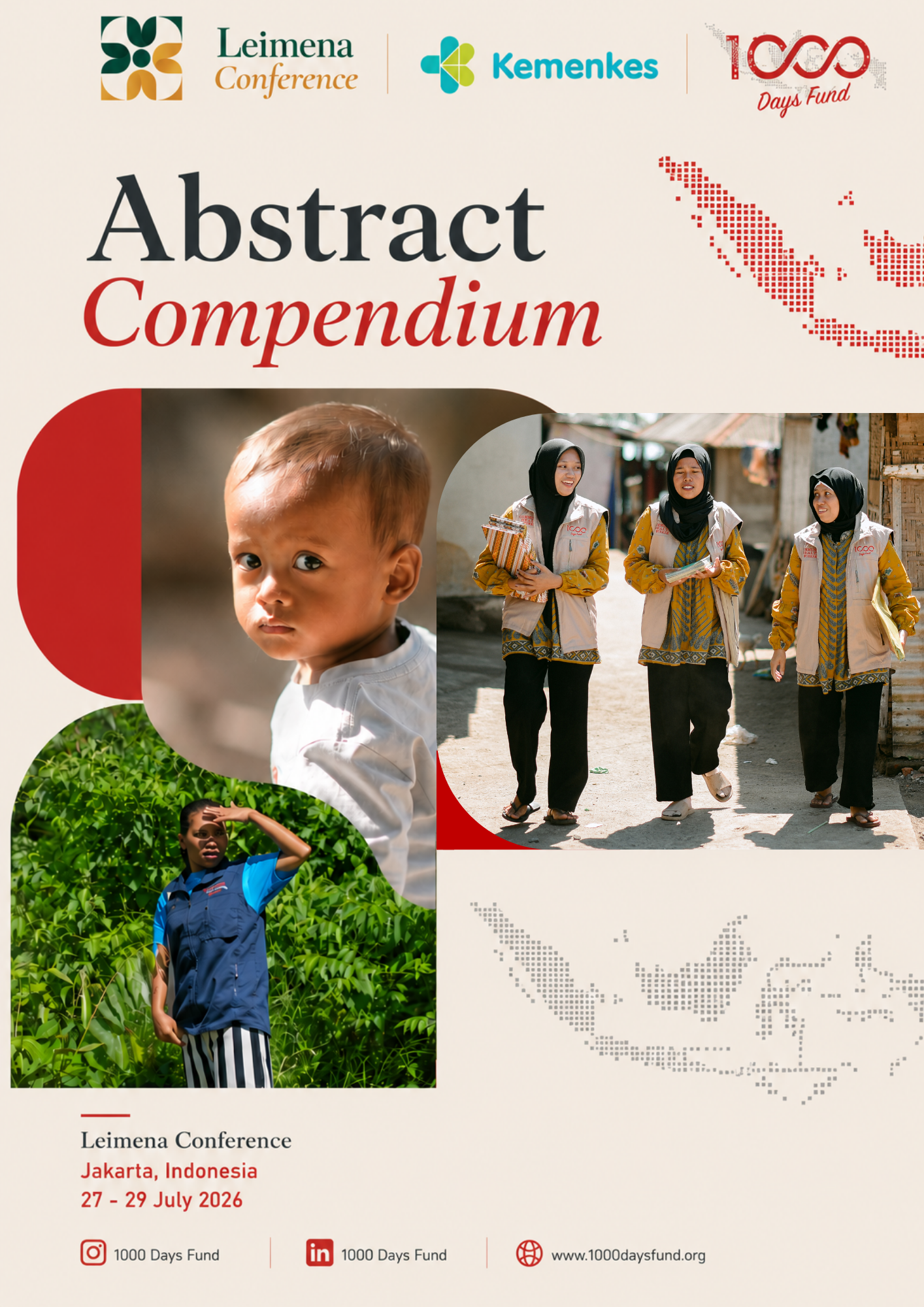
1000 Days Fund’s Abstract Compendium — Leimena Conference 2026
This compendium brings together 1000 Days Fund's research and program evidence presented at the Leimena Conference, hosted by Indonesia's Ministry of Health through the Primary Health Care Consortium (27–28 July 2026). It includes five oral presentations, one poster, and one abstract proceeding drawn from TDF's work across NTT, NTB, and other provinces.
The abstracts share a common thread: strengthening the capacity and welfare of community health workers (CHWs) at the village and Posyandu level is a key lever for improving maternal and child health outcomes during the first 1,000 days of life. Findings combine large-scale quantitative studies, qualitative process evaluations, and innovative approaches like AI-assisted WhatsApp interviews — pointing to four recommendations for Indonesia's Integrated Primary Healthcare (ILP) program: village-puskesmas cost-sharing financing, systematic strengthening of the CHW "5S" framework, context-based engagement strategies, and formal certification and career pathways for CHWs.
Download the full compendium to explore the evidence behind TDF's community health worker programs and their contribution to ending stunting in Indonesia.